
Case study · MotisCo · Brussels Climate Week
Making people care for climate and the people fighting for a future worth living
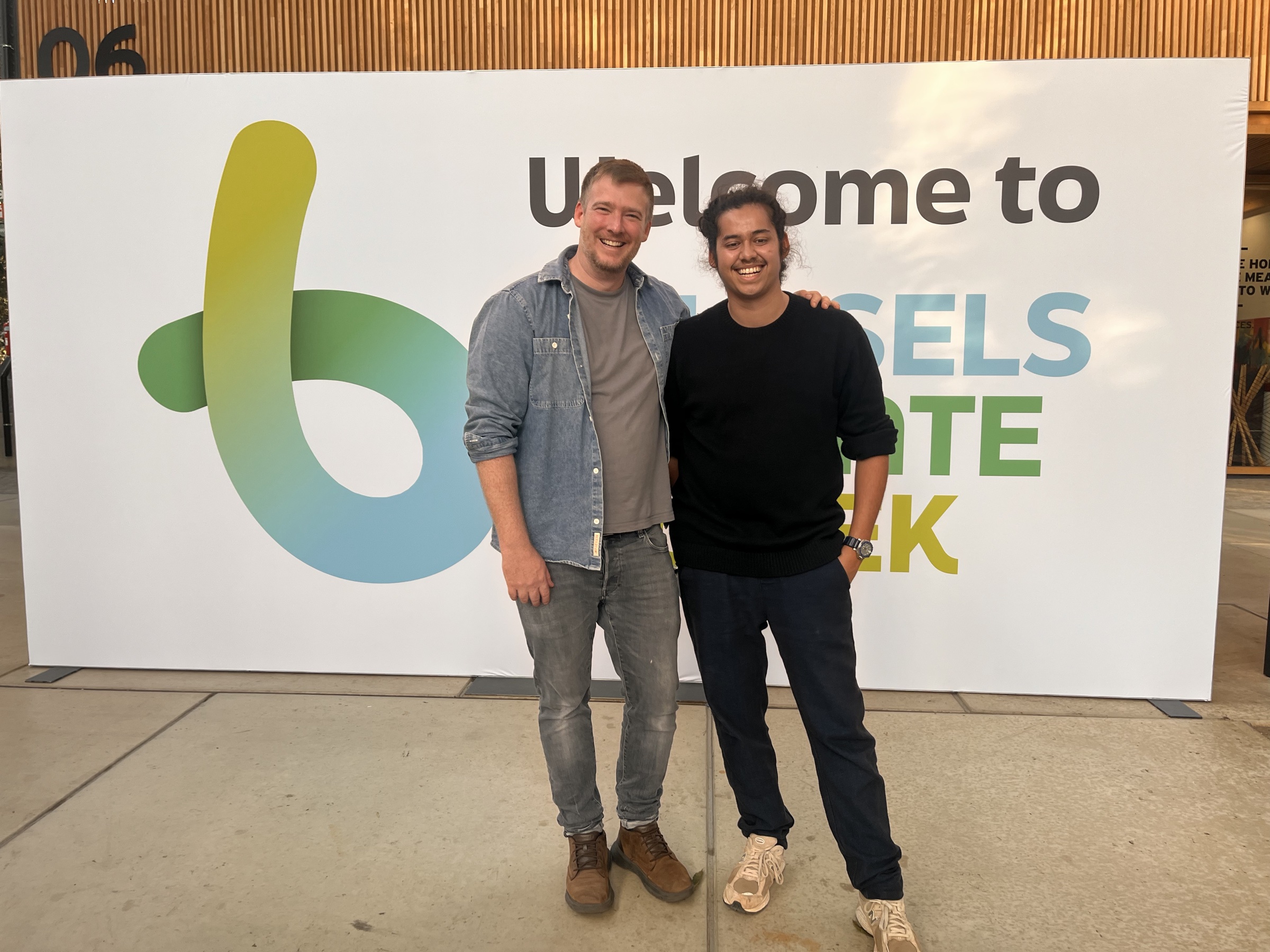
The first Brussels Climate Week, filmed over four days by two people, so everyone who could not be in the hall still saw the week, met nineteen of the people in it, and had something to post the next morning. The same setup travels to your event, a full week or a single day.
The brief
Why that matters for climate
How the week was set up
One interview room
An interview room can be a quiet corner of the venue or a dedicated room. You'd be surprised how much crowd noise can be filtered out in the edit, but ideally you don't record it in the first place. At Tour & Taxis we found a beautiful room and set it up properly, so the same light and the same frame carried all nineteen people and the films sit together as one set. I hosted every conversation myself.
A second camera on the floor
Soul spent the week on the event floor. Everyone booked into the interview room went on a list of focus people, and he knew which stage each of them would be on and when, so every person I interviewed also has b-roll from the stage and around the venue. MotisCo pointed out partners they wanted on camera and he caught their quotes from the stage too. In between he walked up to people and asked if they were happy to answer a few questions.
Speakers booked their own slot
The organisers got one link to share with everyone they wanted interviewed. People booked the slot that suited them, their confirmation let them reschedule, my schedule built itself from the bookings, and I printed call sheets from it. Nobody on their team chased a single appointment.
Releases signed on the spot
Once an interview was done I handed people a QR code or my phone, they signed there, and a copy went straight to them for their own records. Nothing left to chase afterwards, and nothing sitting in a folder when you need to publish.
A recap by the next morning
Every evening I left the set standing, took the day's files onto two separate drives so there were always two copies, and cut the recap: ten seconds on camera from that day's host, the day's strongest moments, names and titles on screen. On the team's desk the next morning.
How I ran the interviews
What you get from four days
- 4 daily recaps, each ready by the next morning for the team to post
- 19 sit-down interviews with speakers, partners and policymakers
- 19 character stories of 90 seconds, in portrait, one cut from each interview
- 19 vox pops with participants and exhibitors from the event floor
- Every long-form interview, rendered unedited with both microphones live, so you hear my questions as well as the answers
- Stills from the interview room for the organisers' own coverage
- One after-movie for next year's partners and ticket sales
Testimonial
What the organisers said
We couldn't be happier with the result and will definitely work with him again!
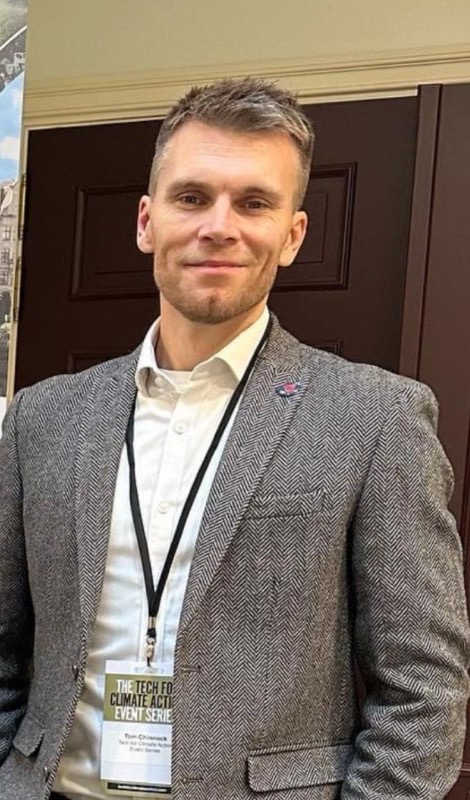
We are extremely pleased with Lars' work for Brussels Climate Week. He did a fantastic job capturing the energy, atmosphere and key moments of the event, turning them into memorable stories that truly brought the experience to life. The aftermovie he created is simply wonderful and perfectly captures the spirit of the week and the challenge we face. Beyond his creative talent, Lars' professionalism, positive attitude and cheerfulness made him a real pleasure to work with. His dedication and enthusiasm made a real difference, and we are very grateful for his contribution.
Tom Chinnock
MotisCo, organisers of Brussels Climate Week
Why it worked
Talk it through
The after-movie
The film that sells next year
The daily recaps
A recap every night
The character stories
Ninety seconds per person
Going longer
Two to four minutes, in landscape
The vox pops
Voices from the floor
A full week or a single day
- A full week. Daily recaps, a ninety-second character story for every interviewee, vox pops, the unedited long-form interviews, an after-movie.
- A single day. Three to five character stories, vox pops, and one film of the day.
- Either way. Longer films of two to four minutes, with the person's own photos, for the stories that need more room.
Before you book a call
What does it cost?
It depends on the shape of your event, so I price each one rather than work off a list. How many days, how many people sit down, whether you want the recaps turning around overnight, and what you need delivered by when. Tell me those on a call and you get a written proposal with a real number in it.
How far ahead do you need booking?
Event weeks go in the calendar months ahead, and most organisers are setting their 2027 budgets right now. If your event is in the first half of 2027, now is the right time to talk, even if nothing is signed.
Is two people enough for a four-day conference?
It was at Brussels Climate Week, across four days, nineteen interviews, four recaps and an after-movie. One room stays lit and staffed all week, one camera moves. For a bigger floor or parallel stages I bring a third. We work that out from your programme before anything is agreed.
What happens on the call?
Half an hour. You tell me the dates, who is coming and what you want people to feel when they watch. I tell you which version fits and what it would take. If it is not a fit I will say so on the call rather than send a proposal anyway.
Tell me about your event
Want something like this?
Every project starts with a conversation. Let's talk about yours.
Start a conversation